






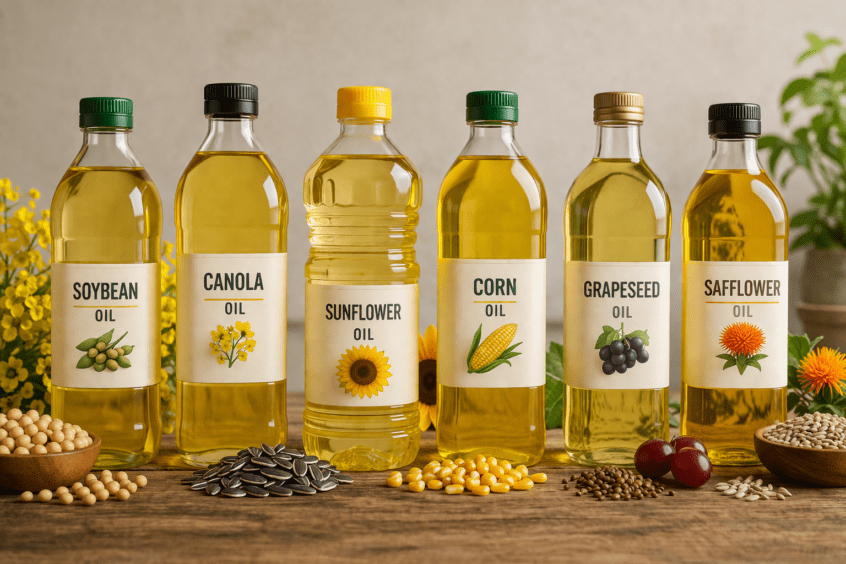
My colleagues and I reviewed the science behind virtually every major claim driving the seed oil panic, so you don’t have to!
The controversy is almost entirely social media-driven, built on weak data such as ecological correlations (eg. seed oil intake rising alongside obesity rates) and a handful of heavily flawed clinical trials. However, the stronger data on the topic paints a very different picture.
The main claims, scrutinized:
❌ “Seed oils cause inflammation”
Fact check: Only 0.12–0.26% of linoleic acid (primary omega-6 fat in seed oils) actually converts to arachidonic acid (the potentially inflammatory omega-6 fat) in the body. Multiple systematic reviews of RCTs found no evidence LA increases inflammation.
❌ “The RCTs prove harm”
Fact check: The 3 most-cited trials suffer from confounding, incomplete data, or other methodological concerns.
❌ “Heating or processing creates toxic compounds”
Fact check: Hexane residues and trans fats in commercially available oils are either nondetectable or exist far below safety thresholds, and consumption of seed oils prepared with standard cooking practices does not raise markers of inflammation or oxidative stress.
What stronger evidence actually shows:
✅ Replacing saturated fat with polyunsaturated fats from seed oils can reduce CVD risk based on prospective cohort studies and RCTs.
✅ Higher linoleic acid intake associated with lower all-cause mortality.
✅ Seed oils can reduce liver fat compared to saturated fat in RCTs.
✅ Higher circulating linoleic acid levels are associated with lower type 2 diabetes risk.
The seed oil hysteria is a case study in how weak evidence gets amplified on social media.
Read the full review here.

Dr. Matthew Nagra is a Naturopathic Doctor in Vancouver who is passionate about evidence-based nutrition and medicine. In addition to his online and public speaking work, he employs a wide range lifestyle interventions, including plant-based nutrition, as well as physical therapies in his practice to help his patients prevent or recover from chronic illnesses and physical injuries. Holding a Plant-Based Nutrition Certification from Cornell University and the T. Colin Campbell Center for Nutrition Studies, he has penned several articles on the topic, underlining his specialized training in nutrition.